Meet tax and compliance requirements
Be ready for IRS requests and other regulatory needs.
Recordkeeping guide
Good recordkeeping makes tax preparation, planning, and business decisions easier. This guide helps you understand what to keep, how long to keep it, and when to review it for your specific situation.
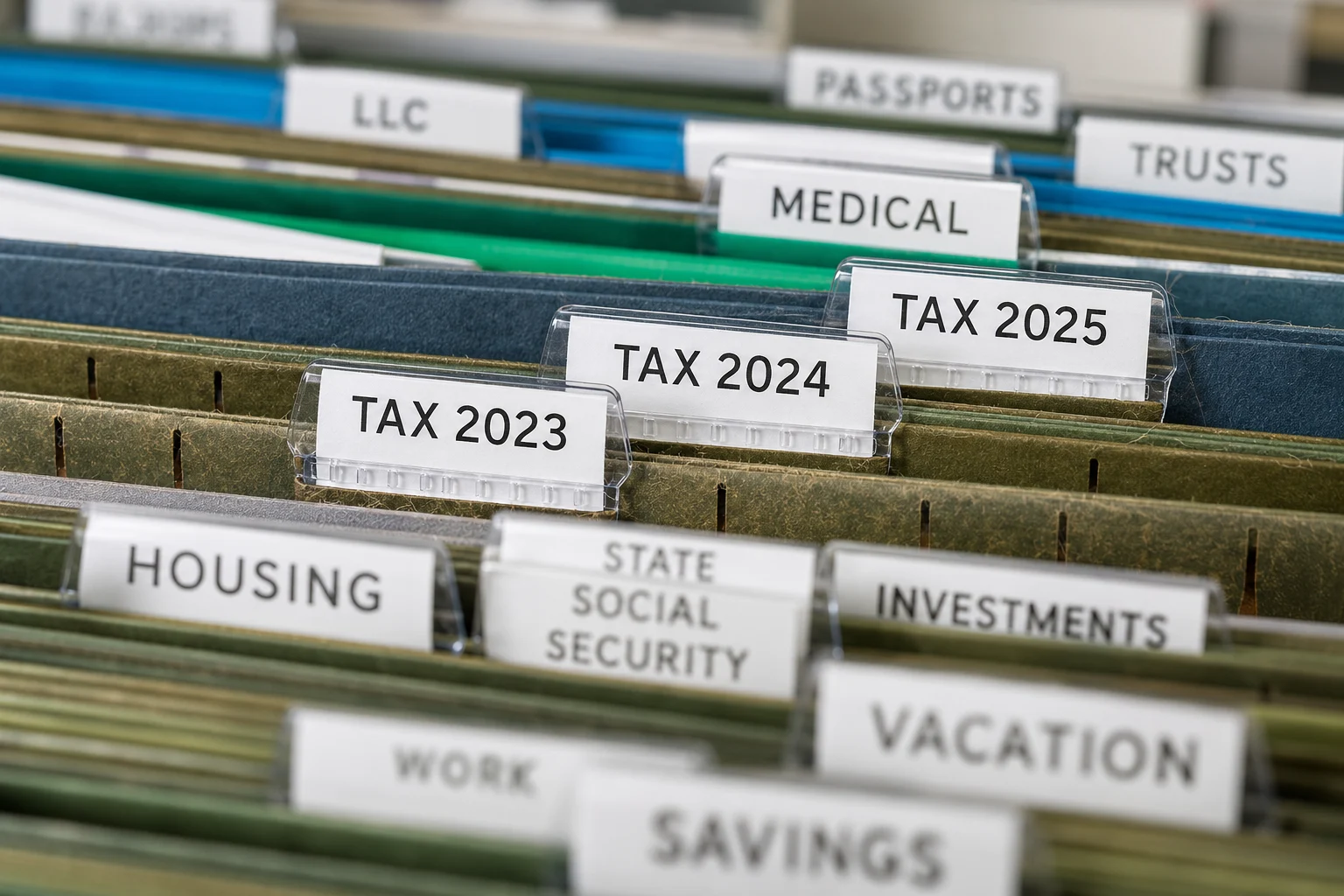
A clearer view of what comes next.
Returns, statements, payroll, and support kept in one place.
Records organized around what owners and advisors need to review.
Guidance for what to keep, what to review, and what can wait.
Key takeaways
Keeping the right records helps you:
Be ready for IRS requests and other regulatory needs.
Find what you need quickly when it matters.
See trends and understand your financial picture.
Keep documentation to substantiate business expenses.
What to keep
Organize records by category so they can be located and reviewed when needed. Digital copies may be appropriate when they are complete, readable, secure, and backed up.
See timing guidanceFiled returns, worksheets, and supporting documents
Monthly statements and reconciliations
Receipts, invoices, mileage, and deduction support
Purchase records, depreciation schedules, and sale documents
W-2s, 1099s, payroll reports, and related filings
Entity documents, agreements, and correspondence
How long to keep records
Retention periods depend on the type of record and your specific situation. The general guidance below can help.
View IRS recordkeeping guidance3 years
Keep for at least three years after filing.
7 years
Keep longer support for losses, bad debts, and unusual items.
Indefinitely
Keep key business, property, entity, and filed return records.
Need help?
We can help you set up a simple, organized system for your business records and answer questions about your specific situation.
Contact our office